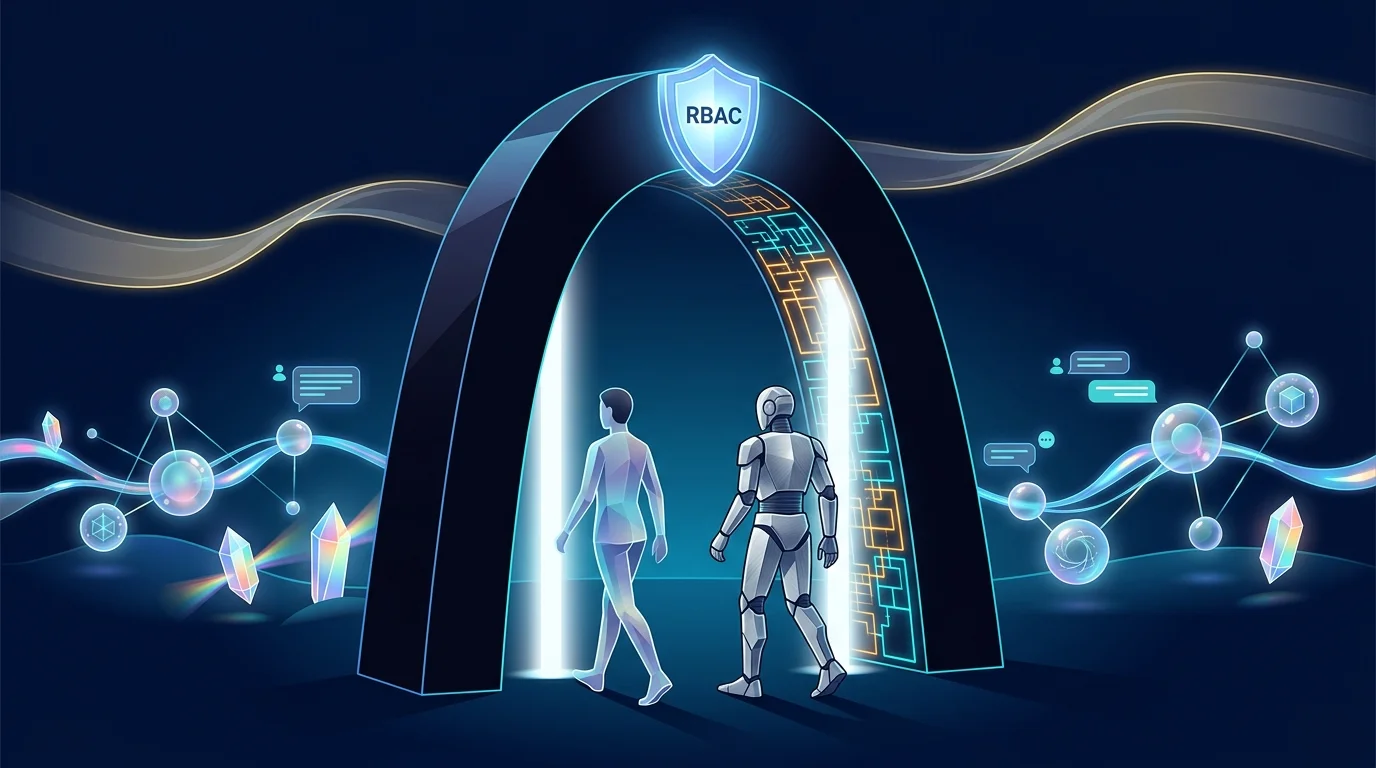
In a regulated organisation, the blocker for AI agents is rarely capability — it is the compliance officer's entirely reasonable question: "where, exactly, are the rules written down?" Botlit's answer is that guardrails are first-class objects, not comments in a prompt.
Policies come in seven types, matching the seven ways agents go wrong: content policies for what may be said, tool policies for what may be done (with per-tool risk levels — low, medium, high), data policies for what may be accessed, response policies for output constraints, budget policies for spend, rate-limit policies for volume, and retention policies for how long conversation data lives. Each is a managed definition with full lifecycle — created, reviewed, updated, audited.
Prompt templates bring the same discipline to instructions. A template is versionable, parameterised with variable placeholders, and rendered on demand; it can be duplicated for variants and addressed by slug. The compliance-approved disclaimer paragraph lives in one template referenced everywhere — not pasted into forty agents with drift in each.
Skills round out the vocabulary: named, reusable capability definitions that attach to agents and travel through the store. Policy bundles and prompt templates are store package kinds too, so a governance team can ship "our standard guardrail set" across every workspace it oversees.
The honest boundary: runtime enforcement — the execution path refusing a high-risk tool call or cutting off an over-budget agent mid-conversation — is on the roadmap, and Botlit says so rather than implying otherwise. What you build today is the codified, reviewable rulebook that enforcement will execute; organisations that write it now go live the day the switch exists, instead of starting their policy debate then.
Illustrative route map only — it is not evidence that this use case has been executed or verified in production.
Illustrative route map
Write the rules of engagement as managed objects: define policies across seven types with tool-risk levels, reusable skills, and versionable prompt templates — the codified, reviewable rulebook your runtime will execute.
- 1
From the Botlit sidebar open Policies to see your guardrail definitions.
You should see: The Policies list loads with a button to create a new policy.
- 2
- 3
- 4
- 5
- 6
Ready to make this your story?